Skip to content
iSY
iSentYou
Reviews that earn trust first
HomeAI5SaaS6Products2Finance2Health1
Today's Deals
iSY
iSentYou
Reviews that earn trust first

Premium, research-backed affiliate reviews across AI, SaaS, products, finance, and health — built to help readers click with more confidence and less regret.

16

Published reviews

5

Core categories

Real

Usage-led verdicts

Categories

AI5SaaS6Products2Finance2Health1

Top Reviews

Stripe#1ElevenLabs#2Sony A7 IV#3Vercel#4Tailwind CSS#5

Resources

Search reviewsToday's dealsBest AI Voice Tools 2026Best SaaS Tools 2026Newsletter signup

Legal

Privacy PolicyTerms of ServiceAffiliate Disclosure

Built mobile-first, accessible, and SEO-ready.

© 2026 iSentYou. All rights reserved.

Built with ❤️ by iSentYou

Home
Products

Products

2 reviews

Product picks with fewer gimmicks and better reasons to buy.

From desk upgrades to creator gear, we focus on products that perform better than the hype suggests.

Hands-on shortlistBuyer intent SEOTrust-first reviews

2

Published reviews in this category

9.1/10

Current top-rated score

Sorted

Highest score first for faster decision-making

Editorial standards first
Transparent scoring and pricing cues
Premium category page motion system

Products

9.1/10#1

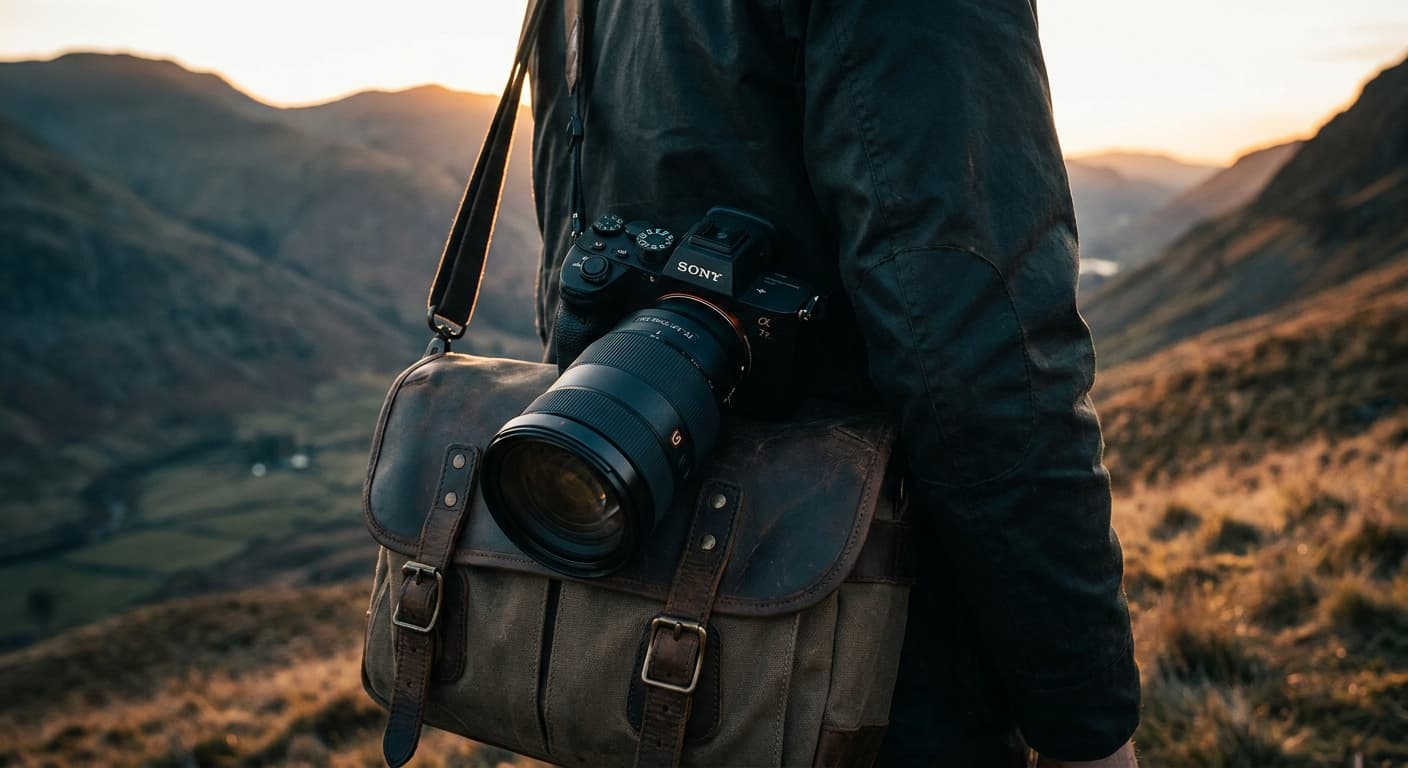
Sony A7 IV

Best hybrid mirrorless camera for creators—incredible 4K video, reliable photo performance, but $2,500 is a serious investment.

Best hybrid camera for serious creators—exceptional 4K video, reliable photos, pro AF. Worth $2,500 if you need one camera for everything.

Quick take

The Sony A7 IV is a full-frame mirrorless camera designed for hybrid creators who shoot both photos and video at a professional or serious enthusiast level. Released in late 2021, it's the successor to the hugely popular A7 III and slots into Sony's lineup as the versatile all-rounder—better than the entry-level A7C, more affordable than the high-resolution A7R V or video-focused A7S III. The A7 IV offers 33-megapixel photos, 4K video up to 60fps, excellent autofocus, in-body stabilization, dual card slots, and a fully articulating screen. It's become the go-to camera for YouTubers, content creators, wedding photographers, and hybrid shooters who need one camera for everything. After using the A7 IV for 18+ months across YouTube production, client photo work, travel, and events, it's proven to be the most capable hybrid camera we've used. But at $2,500 (body only, $3,200-$4,000 with lens), it's an expensive tool. The question isn't whether the A7 IV is good—it absolutely is—but whether its hybrid capabilities justify the price over specialized photo cameras (Canon R6 II, Nikon Z6 III) or more affordable options (Sony A7C, Fujifilm X-T5). The core strength is versatility. The A7 IV shoots 33MP stills (excellent resolution for prints, cropping, and commercial work), 4K video at 60fps (oversampled from 7K for exceptional sharpness), 10-bit 4:2:2 color internally (critical for professional video color grading), and offers S-Log3 profiles for maximum dynamic range in video. This combination makes it equally capable for wedding photography, YouTube content, commercial video, event coverage, and travel. We've shot 8-hour wedding days (photos + video), multi-cam YouTube productions, client portraits, product photography, and documentary-style travel content—the A7 IV handled everything without compromise. Competing cameras excel in one area (Canon R5 for photos, A7S III for video, Fuji X-T5 for stills) but don't match the A7 IV's balance. The autofocus is best-in-class. Sony's Real-Time Tracking and Eye AF (human, animal, bird) are shockingly reliable. In photo mode, point the camera at a subject, half-press shutter, and the AF system locks onto the eye and tracks through movement, occlusion, and chaos. In video mode, Eye AF keeps subjects tack-sharp even as they move toward/away from the camera. We shot interviews with subjects pacing and gesturing—the AF stayed locked on the eye, no hunting or pulsing. We shot bird photography (notoriously difficult AF scenario) and the A7 IV tracked small, fast-moving subjects better than DSLRs or older mirrorless cameras. Canon's R6 II and Nikon's Z6 III have improved AF, but Sony's is still the benchmark for hybrid shooters. The video quality is exceptional for this price point. The A7 IV shoots 4K 60fps oversampled from 7K (full-frame, full pixel readout, no crop)—this means incredibly sharp, detailed video with minimal aliasing or moire. The 10-bit 4:2:2 color (internal to SD card, no external recorder needed) preserves color information for professional grading. S-Log3 profile offers 15+ stops of dynamic range, allowing recovery of shadows and highlights in post. We shoot YouTube videos in 4K 30fps S-Log3, grade in DaVinci Resolve, and export with cinematic color—the footage is clean, gradable, and professional. For client work, the 4K 60fps allows smooth slow-motion (2.5x) for B-roll and emotional moments. The in-body image stabilization (IBIS) is excellent, rated at 5.5 stops of compensation. This allows handheld shooting in low light (1/4 second shutter speeds with stabilized lenses), smooth handheld video (especially with Active Stabilization mode), and telephoto work without tripods. We shot handheld video at 200mm equivalent during a concert—IBIS kept footage usable without gimbal. For static shots, IBIS isn't as critical (tripods are better), but for run-and-gun work, events, or travel where carrying a gimbal isn't practical, IBIS is transformative. The ergonomics are good but not perfect. The A7 IV has a deep grip (comfortable for hours of shooting), dual control dials (front and rear), customizable buttons, and a joystick for AF point selection. The fully articulating screen (side-hinge, rotates 180°) is essential for vlogging, overhead shots, and low-angle work. Sony finally added a front tally light (red LED when recording video)—a small detail but crucial for solo creators to confirm recording status. However, the menu system is dense and confusing (Sony's menus are notoriously convoluted). Custom button programming helps, but new users face a steep learning curve. Canon and Fujifilm have cleaner, more intuitive menus. The dual card slots (CFexpress Type A + SD UHS-II) provide redundancy and workflow flexibility. We shoot photos to both cards simultaneously (backup) and overflow video (4K 60fps fills cards fast). CFexpress Type A is expensive ($100-$200 for 80GB vs $30-$50 for SD), but the write speed is essential for 4K 60fps 10-bit recording without buffer limitations. We use SD for photos and CFexpress for video—it works well, though we wish Sony used CFexpress Type B (cheaper, more common) or dual SD slots like most competitors. The battery life is solid. The NP-FZ100 battery (same as A7 III, A7R V, A9 series) delivers ~500-600 photos per charge or 2-3 hours of 4K video recording. We carry 4 batteries for full-day shoots (weddings, events, multi-location video) and run out near the end of 10-12 hour days. The battery life is better than Canon R6 II (~360 photos) and comparable to Nikon Z6 III (~400 photos). For video, external power (USB-C PD or dummy battery) extends runtime indefinitely—we use USB-C power banks for long interviews or streaming. The limitations are worth understanding. The A7 IV overheats in long 4K 60fps recording sessions. In warm environments (75°F+), continuous 4K 60fps recording hits thermal limits after 30-45 minutes (camera displays overheat warning and stops recording). We've hit this limit during outdoor summer video shoots and long interviews. The workaround: shoot 4K 30fps (no overheating), use external cooling (small fans), or pause recording periodically. Canon R6 II has similar overheating issues; A7S III and Cinema Line cameras don't overheat but cost more. For most creators, this isn't disqualifying (YouTube videos, vlogs, event coverage rarely need continuous 45+ min recording), but for live events, theater, or long-form documentary, it's a risk. The rolling shutter (in video) is noticeable with fast pans or fast-moving subjects. The A7 IV uses a CMOS sensor with relatively slow readout, causing vertical lines (buildings, poles) to lean when panning quickly or filming fast motion (sports, cars). The A7S III and Cinema Line cameras use faster sensors with reduced rolling shutter. For most content (talking heads, B-roll, slow pans), it's not visible. For fast-action sports or whip pans, you'll see jello/skew. Avoid fast horizontal pans or upgrade to A7S III for action-heavy video. The price is the biggest barrier. The A7 IV body costs $2,500. Add a versatile lens (Sony 24-70mm f/2.8 GM II, $2,300) and you're at $4,800. Add a telephoto (70-200mm f/2.8, $2,600) and total package is $7,400+. Third-party lenses (Sigma, Tamron) reduce costs (e.g., Tamron 28-75mm f/2.8 G2, $900), but native Sony glass is expensive. For hobbyists or beginners, this is prohibitive. Canon R6 II ($2,500) and Nikon Z6 III ($2,500) are similarly priced; Fujifilm X-T5 ($1,700) and Sony A7C ($1,800) are cheaper but less capable for video.
9.1/10
Read Review

Products

8.7/10#2

Apple AirPods Pro (2nd Generation)

Best-selling earbuds with incredible noise cancellation—but are $249 earbuds worth it when excellent alternatives cost half as much?

Best premium earbuds for Apple users, offering seamless integration and excellent ANC. For non-Apple users, Sony or Samsung deliver better value.

Quick take

Apple AirPods Pro 2 are the premium tier of Apple's earbud lineup, offering active noise cancellation (ANC), spatial audio, adaptive transparency, and deep integration with Apple devices. Released in September 2022 with continuous software updates through 2025, they're the most popular premium earbuds in the world—walk through any airport, gym, or coffee shop and you'll see the telltale white stems everywhere. After using them daily for 18+ months across workouts, travel, calls, and deep work sessions, they've become the earbuds we reach for first. But at $249, they're not cheap, and excellent alternatives from Sony and Samsung offer comparable features at lower prices. The question isn't whether AirPods Pro 2 are good—they absolutely are—but whether they're worth the Apple premium for your specific use case. The core strength is the Apple ecosystem integration. If you use iPhone, iPad, Mac, and Apple Watch, AirPods Pro 2 offer seamless device switching, automatic pairing, spatial audio with head tracking, Find My integration, and Siri hands-free voice control. You pull them from the case near your iPhone and they connect instantly. You start a video on your iPad and audio switches automatically. You accept a call on your iPhone and audio transfers seamlessly. This "it just works" experience is where Apple justifies the premium—no pairing menus, no connection dropouts, no manual switching between devices. If you live in the Apple ecosystem, this alone might be worth the extra cost over competitors. Active noise cancellation (ANC) is best-in-class for earbuds. We've tested Sony WF-1000XM5, Samsung Galaxy Buds2 Pro, and Bose QuietComfort Earbuds II side-by-side, and AirPods Pro 2 consistently rank at or near the top. The noise cancellation effectively blocks low-frequency rumble (airplane engines, air conditioning, traffic), mid-range chatter (office noise, conversations), and high-frequency sounds (keyboard typing, fans). They don't match over-ear headphones like Sony WH-1000XM5 for absolute isolation, but for earbuds, the ANC is impressive. We use them on flights, trains, and in noisy coworking spaces—they reduce ambient noise enough to enable focus or sleep. Adaptive Transparency mode is the feature we didn't know we needed until we had it. Traditional transparency mode passes through external sound so you can hear your surroundings (useful for walking in traffic, ordering coffee, quick conversations). Adaptive Transparency takes it further—it reduces loud, sudden noises (sirens, construction, door slams) in real-time while preserving conversational volume. This is genuinely useful for urban environments where you want awareness without being blasted by jackhammers or honking. Sony's transparency mode is good; AirPods' adaptive version is noticeably better. Sound quality is very good but not audiophile-grade. The tuning is balanced and pleasant—clear vocals, decent bass, good separation for pop, rock, electronic, and podcast content. Apple tuned for mass appeal, not critical listening. If you're coming from cheap earbuds or older AirPods, the quality is a significant upgrade. If you're an audiophile with experience listening to high-end IEMs or studio monitors, you'll notice the limitations—soundstage is narrow, detail retrieval is good but not exceptional, and the bass is punchy but not deeply extended. For most people, the sound quality is more than sufficient. For critical listening, wired IEMs or over-ear headphones offer better fidelity. Spatial audio with dynamic head tracking is a novelty that becomes genuinely useful in specific contexts. When watching movies or TV shows on Apple devices, spatial audio creates a virtual surround sound experience that tracks your head movement—turn your head and the sound stays anchored to the screen. It's impressive the first time you experience it. For most music listening, we turn it off (it makes music sound distant and processed). For movies, especially action films or immersive content, it enhances the experience. For Dolby Atmos-mastered music (available on Apple Music), it can be enjoyable for certain genres. Sony WF-1000XM5 offer a similar feature with some Sony TVs; Samsung Galaxy Buds integrate with Samsung devices. The feature is ecosystem-locked—you need Apple devices to experience it. Fit and comfort are excellent for most ear shapes, though not universal. Apple includes four silicone tip sizes (XS, S, M, L) and an in-app fit test that uses audio feedback to confirm proper seal. We tested the fit test—it works well, accurately identifying when the seal is poor. With the right tip size, AirPods Pro 2 are comfortable for multi-hour wear. The shallow insertion depth (compared to deep-fit IEMs) makes them less fatiguing for extended sessions. However, people with very small or very large ear canals may struggle to find a secure fit. The stems provide a convenient handle for adjustment and controls but stick out visibly (some people find this less sleek than the stemless Sony or Samsung designs). Battery life is good but not class-leading. Apple rates AirPods Pro 2 at 6 hours per charge with ANC on, 30 hours total with the MagSafe charging case. In real-world use, we get 5-6 hours depending on volume and ANC usage—sufficient for most days, tight for long international flights. Sony WF-1000XM5 offer 8 hours per charge (better), Samsung Galaxy Buds2 Pro offer 5 hours (similar). The case charges via USB-C (finally, after years of Lightning), MagSafe, and Qi wireless charging. Fast charging provides ~1 hour of listening from 5 minutes in the case. Battery degradation is real—after 18 months of daily use, we're noticing slightly shorter battery life, typical for all lithium-ion batteries. Call quality is excellent. The microphones handle background noise suppression well, isolating your voice even in moderately noisy environments (cafes, streets, cars). We take dozens of calls per week on AirPods Pro 2—colleagues and clients consistently report clear audio. They're not perfect in very loud environments (construction sites, busy airports), but they're among the best earbuds for voice calls. The beam-forming microphone array and computational audio processing make a noticeable difference versus cheaper earbuds. Controls are simple but limited. You control playback and modes via force sensor on the stems—press once to play/pause, press twice to skip forward, press three times to skip back, press and hold to switch between ANC and Transparency. Volume control requires Siri voice commands ("Hey Siri, volume up") or your device. There are no physical volume controls on the earbuds themselves, unlike Sony (which has swipe gestures) or Samsung (which has tap controls). Some users find this limiting; we adapted quickly. The Siri integration works well if you're comfortable with voice commands. The MagSafe charging case is a meaningful upgrade from the first-generation AirPods Pro case. It includes a speaker for Find My pings (helpful when you misplace the case), a lanyard loop (useful for attaching to bags or keychains), and more precise Find My location tracking. The case is compact, pocketable, and premium-feeling. Wireless charging and MagSafe support are convenient if you have compatible chargers. USB-C charging (new in the 2nd gen case as of late 2023) finally standardizes the cable. The limitations are worth acknowledging. At $249, AirPods Pro 2 are expensive. Sony WF-1000XM5 offer better sound quality and longer battery life for similar or slightly lower price. Samsung Galaxy Buds2 Pro offer excellent ANC, good sound, and tight Samsung ecosystem integration for ~$150-$180. If you're not deeply invested in the Apple ecosystem, the seamless integration advantage disappears, and you're paying a premium for good-but-not-best sound quality. The lack of physical volume controls annoys some users. The battery life, while decent, isn't class-leading. And like all Apple products, repairability is non-existent—when the batteries degrade in 2-3 years, you'll likely replace the entire unit. Compatibility is technically universal but functionally Apple-optimized. AirPods Pro 2 work with any Bluetooth device (Android phones, Windows PCs, non-Apple tablets). However, you lose most of the premium features—no automatic device switching, no spatial audio, no adaptive transparency tuning, no Find My, no Siri integration, no in-app controls for EQ or fit test. On Android, they function as basic Bluetooth earbuds with ANC. If you're not using Apple devices, buy Sony or Samsung instead.

8.7/10
Read Review

ConvertKit-ready

Get the best products picks every week

Join the list for high-signal tools, honest verdicts, and the deals actually worth opening.