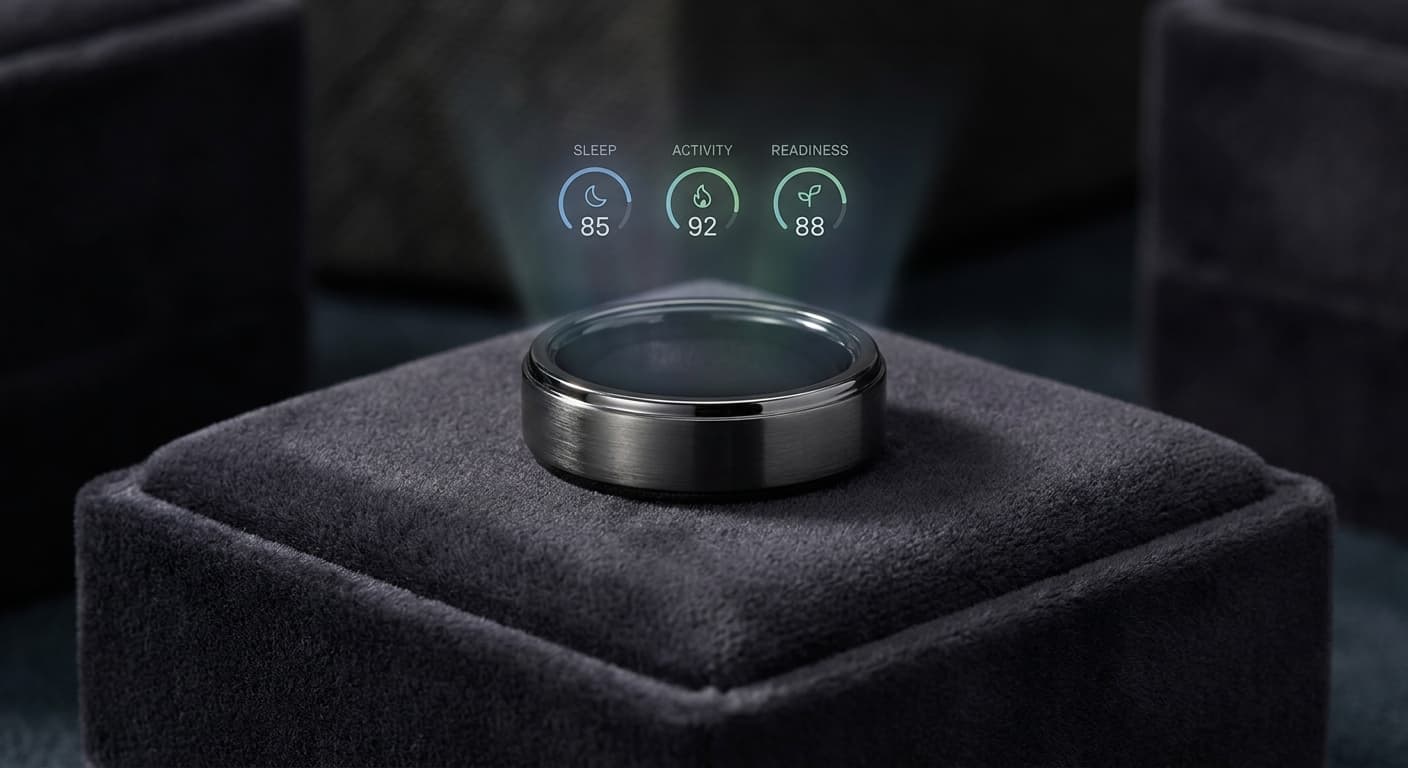
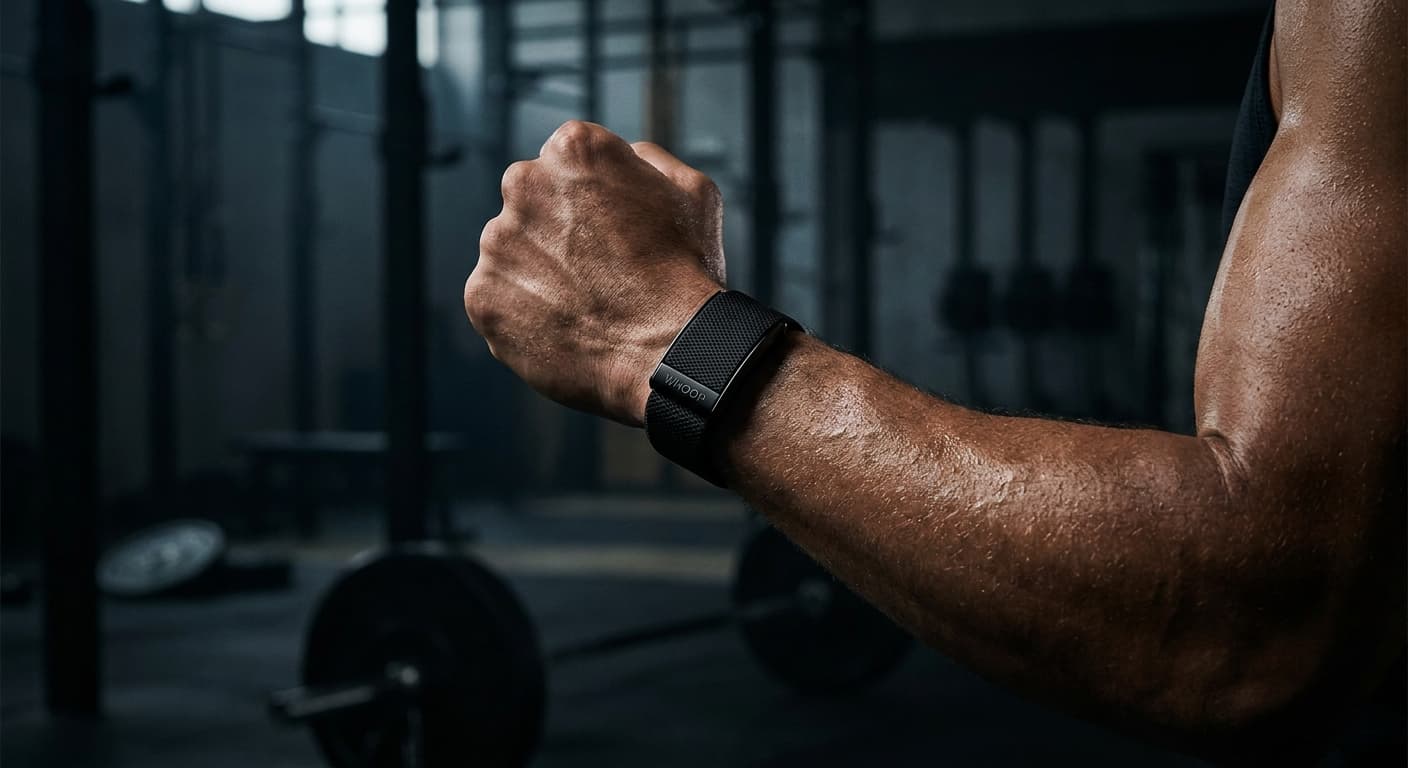
Screenless fitness tracker for serious athletes—but $239/year subscription and no instant feedback make it a tough sell vs Apple Watch.
Best recovery and sleep tracker for serious athletes willing to pay $239/year, but screenless design and lack of real-time feedback limit appeal.
Quick take
Whoop 4.0 is a screenless wearable fitness and health tracker designed for serious athletes, biohackers, and anyone obsessed with optimizing recovery, strain, and sleep. Unlike smartwatches (Apple Watch, Garmin) or fitness bands (Fitbit) with screens and notifications, Whoop is a minimal band that continuously monitors heart rate, heart rate variability (HRV), respiratory rate, skin temperature, blood oxygen, and sleep stages. All data lives in the Whoop app, which provides daily recovery scores, strain tracking, and sleep coaching based on your physiology. The device is free, but the service requires a subscription—$239/year (12-month), $199/year (24-month), or $30/month. After wearing Whoop 4.0 for 12+ months across training cycles, travel, stress, illness, and daily life, we've learned what it does well and where it falls short. Whoop excels at providing longitudinal health trends, recovery insights, and sleep optimization for people willing to trust data over feelings. But the screenless design, expensive subscription, lack of real-time feedback, and limited third-party integrations make it a niche product. The question isn't whether Whoop collects good data—it does—but whether paying $239/year for insights you can't act on immediately is worth it when Apple Watch and Oura Ring offer comparable tracking with more features.
The core value proposition is recovery-driven training. Whoop measures three pillars daily: Recovery (0-100% score based on HRV, resting heart rate, sleep quality, respiratory rate), Strain (0-21 cardiovascular load from activity), and Sleep (hours, stages, debt, performance). The philosophy is: train hard when recovery is high, take it easy when recovery is low, and prioritize sleep to maximize both. This approach is validated by exercise science—HRV is a reliable indicator of autonomic nervous system readiness, and sleep quality directly impacts performance. Whoop translates complex physiology into actionable scores.
We used Whoop to guide training intensity during marathon prep, strength cycles, and high-stress work periods. On mornings with 60-80% recovery (green), we'd do hard workouts—tempo runs, heavy lifting, intense intervals. On mornings with <30% recovery (red), we'd do easy movement or rest. Over months, patterns emerged: alcohol tanks recovery (even 1-2 drinks drops HRV 10-20%), poor sleep compounds (consecutive bad nights crater recovery), stress and illness show up in HRV before symptoms, and consistent sleep timing improves baseline recovery. These insights shifted behavior—we cut weekday drinking almost entirely, prioritized sleep over late-night work, and adjusted training plans based on recovery rather than calendar.
The sleep tracking is the most valuable feature. Whoop tracks sleep stages (light, deep, REM, awake), sleep duration, respiratory rate, and HRV during sleep. Each morning you get a sleep performance score (percentage of sleep need met) and insights (e.g., 'Your REM sleep was 15% below baseline'). The app recommends bedtimes based on your recovery and upcoming strain. We cross-checked Whoop's sleep data against Oura Ring and Apple Watch—Whoop's sleep stage accuracy is good but not perfect (no consumer wearable is clinical-grade). The trends are reliable enough to guide behavior. The sleep coaching helped us identify optimal sleep duration (7.5-8 hours for us, varies per person), wind-down routines that improve deep sleep, and the massive impact of late caffeine or alcohol.
The screenless design is both strength and limitation. Whoop has no display—no time, no notifications, no instant gratification. You wear it 24/7, charge it via a slide-on battery pack (you never remove the band), and check data in the app. This minimalism appeals to people tired of screen addiction and constant notifications. It also frustrates people who want real-time feedback during workouts. When running, you can't glance at your wrist to see heart rate or pace—you need to pull out your phone or pair a separate GPS watch. Apple Watch and Garmin show live stats on the wrist; Whoop doesn't. If you want in-the-moment biofeedback, Whoop isn't the tool.
The strain tracking is useful but not real-time. Whoop calculates cardiovascular strain (0-21 scale) based on heart rate zones and duration. A 5K run might be 10-12 strain, an easy walk 3-4, a hard lifting session 14-16. The app shows cumulative strain throughout the day. However, strain updates appear after activity, not during. You can't see your heart rate zones mid-workout to adjust intensity. For athletes who train by feel or follow structured plans with external tools (Garmin, Strava, TrainingPeaks), this is fine. For people who want live pacing or HR zone guidance, it's limiting. Garmin watches show real-time HR, zones, VO2 max, training load, and recovery in one device; Whoop shows it post-hoc in the app.
The HRV and recovery science is solid but requires buy-in. Heart rate variability (time variation between heartbeats) is a validated marker of autonomic nervous system balance. High HRV typically indicates good recovery and readiness; low HRV indicates stress, fatigue, or illness. Whoop measures HRV during deep sleep (the most stable measurement window) and calculates a recovery score using HRV, resting heart rate, sleep quality, and respiratory rate. The algorithm is proprietary but aligns with published research. The challenge is trusting the score over how you feel. Some mornings you feel great but get 30% recovery (red)—do you rest or ignore it? Some mornings you feel terrible but get 70% recovery (green)—do you train hard? Over time, we learned the score is usually right. Ignoring low recovery and training hard led to injury, illness, or poor performance. Trusting high recovery and pushing led to breakthroughs. But it takes months of data and self-awareness to calibrate.
The subscription model is expensive and polarizing. The Whoop 4.0 device is free with membership, but membership costs $239/year (12-month plan), $199/year (24-month), or $30/month (month-to-month). You're paying for data analysis, algorithm updates, and app access—not hardware. For people who value longitudinal health insights, coaching, and behavior change, the subscription is worth it. For people who want one-time purchase wearables, it's frustrating. Apple Watch ($399-$799 one-time) includes fitness tracking, sleep monitoring, ECG, blood oxygen, and smartwatch features with no subscription. Oura Ring ($299-$549 one-time + $5.99/month subscription) offers similar recovery/sleep tracking. Whoop's subscription is higher than Oura's and ongoing, making total cost of ownership steep ($239/year × 3 years = $717 vs Apple Watch Series 10 $399 one-time).